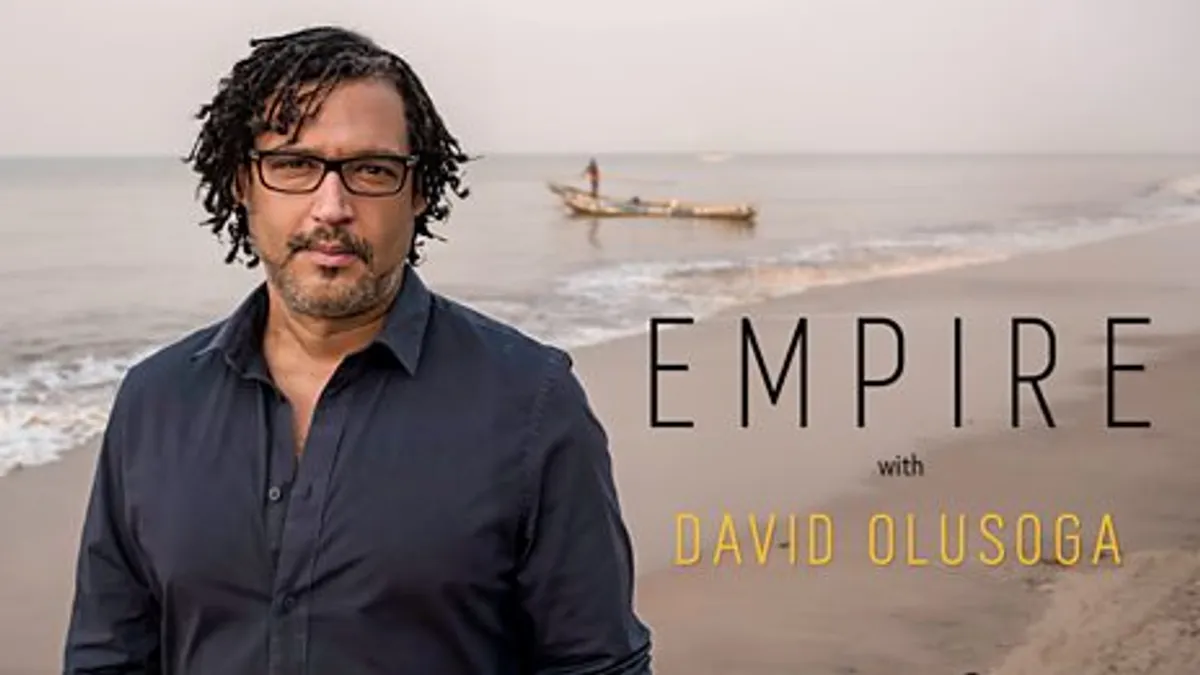
Empire with David Olusoga - Review
A reflection on whether extended travel truly transforms people, examining the tourist bubble in modern backpacking culture and how to travel more authentically to gain genuine understanding of different cultures.
The British Empire is a fascinating, deep and complex subject of history that, especially in the past ten years, had its nature of imperial memory strongly debated and contested in the Anglosphere. Across all sides of the political spectrum the case of empire has been raised either as a force of modernizing good and “necessary evil” across the global south, or a exploitative and extractive project that has existed only for the oppression of those less fortunate.
In the UK specifically, the British Empire itself had experienced renewed contestion following the 2020 Black Lives Matter protests that saw statues commemorating figures with deep connections to slave economies pulled down. Though this has now subsided, the British Empire persists in the British consciousness. Olusuga attempts to reckon with this and cover the legacy of empire in ways Brits aren’t cognizant of.
The first episode covers the commercial origins of the British Empire — the formation of trading companies in an era where other European nations such as Spain and Portugal have already begun their colonial ventures in the New World and the beginnings of a global nautical trading network Southeast Asia. This foundation segues into England’s very first settler-colonial holdings in the Americas.
The show competently traces England’s expansion into the Caribbeans starting with Barbados, where sugar farming plantations inspired by the Dutch’s own farms in Brazil, and used slaves from West Africa for the production for the commodities. Interesting historical details are explored here, such as how Barbados became the foundation of the codification of chattel-slavery that propelled imperial development.
Olusuga’s and BBC’s presentation of these historical moments are strong. The BBC sends him out personally to each of the locations covered throughout the show so he can show the viewers exactly how each setting now looks, and also gives him a chance to interview regional historians and academics in each of these regions, who’s passion and knowledge for these traumatic subjects covered is commendable.
The framing of these interviews, however, directs a specific historiographical positioning — one that privileges testimonial evidence of structural violence enacted against oppressed natives while not engaging with other aspects of empire. The scripted interviews signals almost a condescension where Olusuga poses rhetorical questions and guides the viewer on how to feel, assuming viewers require explicit instruction on obvious ethical positions.
The documentary’s analytical limitations stem from its singular interpretive lens: a focus on experiential histories of oppression that, while ethically necessary, may inadvertently reproduce a flattened understanding of imperial complexity. Olusuga as a Black Briton is right to engage with the Empire’s dark past of actively participating in slavery and, more generally and recently, the oppression of his ancestors. Though this focus inherently restricts the documentary’s scope.
Colonial intellectuals and politicians, for example, appropriated Western political philosophy and administrative frameworks to critique indigenous systems and advance anti-colonial movements. Similarly unexplored are the commercial networks that established foundations for contemporary global trade architecture. The documentary fails to engage with how colonial subjects navigated, resisted, and occasionally instrumentalized imperial structures—a significant omission that diminishes historical actors’ agency.
Even from a classical Marxist perspective, empire and imperialism, seen as the highest stage of capitalism, reached its peak with the British Empire, a small island that controlled a quarter of the world at its peak, still helped propel technological developments and advanced humanity on a global scale not seen hitherto in any other empire. This is not to valorise imperial violence, but to dialectically analyze the mutual process of development and exploitation within the empire.
Despite being titled “Empire”, the show is analytically constrained slavery, trauma and violence, while failing to engage with the broader imperial systemic legacies. This does however pose its own significant challenge. How do you honour those who have suffered while not “paying any favours” to imperialism, as well as reckoning current ethical and moral frameworks against those existed during the imperial age both in Western and non-Western nations.